Provider balance is a state, not a full business statement
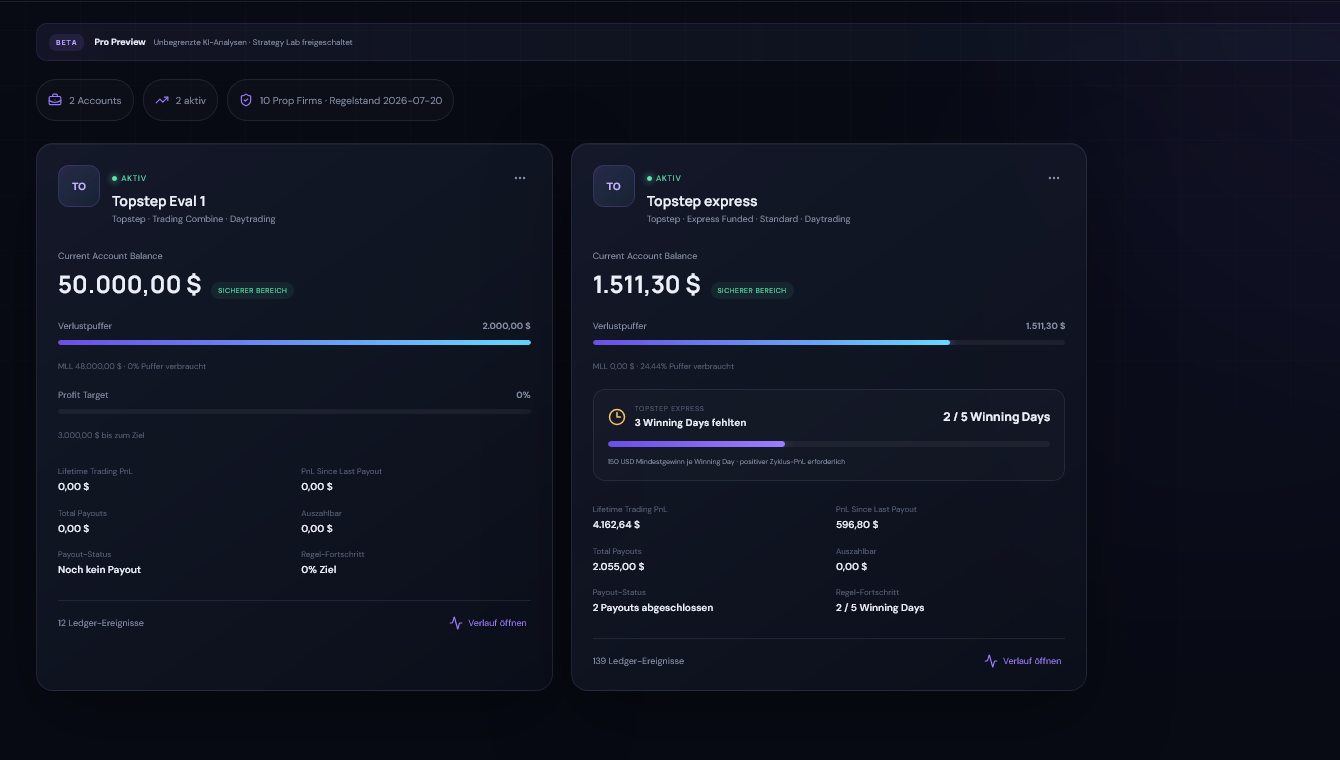
A synchronized balance answers one question: what account value does the provider report now? It does not automatically explain how much has already been paid out, which external fees were incurred or how much net economic value exists across the full account lifetime.
Payouts and costs therefore belong in an economic ledger. The provider balance remains the external account endpoint. Both layers are true, but they answer different questions.
Topstep makes the distinction especially visible
According to current Topstep documentation, an Express Funded Account starts at $0. The 50K, 100K and 150K labels describe buying power, not starting balance. Its Maximum Loss Limit begins below zero and can trail up until it locks at zero.
A Trading Combine behaves differently: it begins at the advertised account size, such as $50,000. Applying one balance formula to both phases can make a new Express account look like a massive loss or misread a Combine as a profit-only account.
| Account phase | Starting display | Meaning of size label | Risk context |
|---|---|---|---|
| Trading Combine | e.g. $50,000 | Starting account value | MLL begins below and trails |
| Express Funded Account | $0 | Buying power | MLL begins negative and can lock at $0 |
| After first payout | Reduced provider balance | Unchanged | Topstep states MLL resets to $0 |
The classic error is subtracting a payout twice
Assume the provider balance is $2,000 before a payout. After the distribution, the API reports $1,000. If the journal subtracts the documented payout again from that already updated balance, it incorrectly displays zero.
The correct state is a $1,000 provider balance plus a separate payout event. Lifetime trading P&L, cash distributed, costs and current balance can then coexist without applying one movement twice.
Data hierarchyProvider balance = current external endpoint. Payout = documented economic event. Trades = explanatory performance history.
Payout eligibility is a fourth, time-sensitive state
Topstep currently describes two Express paths: Standard with five winning days of at least $150 and Consistency with three traded days plus a 40% consistency target. Payout caps, profit split and account-size rules also apply.
These details can change and cannot be inferred from balance alone. A system should store rule version and verification date instead of treating today’s threshold as permanent truth.
- Store payout path and account phase explicitly.
- Count qualifying days only inside the correct payout cycle.
- Do not silently treat the payout-request day as a new winning day.
- Keep provider rules separate from personal daily limits.
- Update the source and verification date when rules change.
A clean cockpit shows several truths side by side
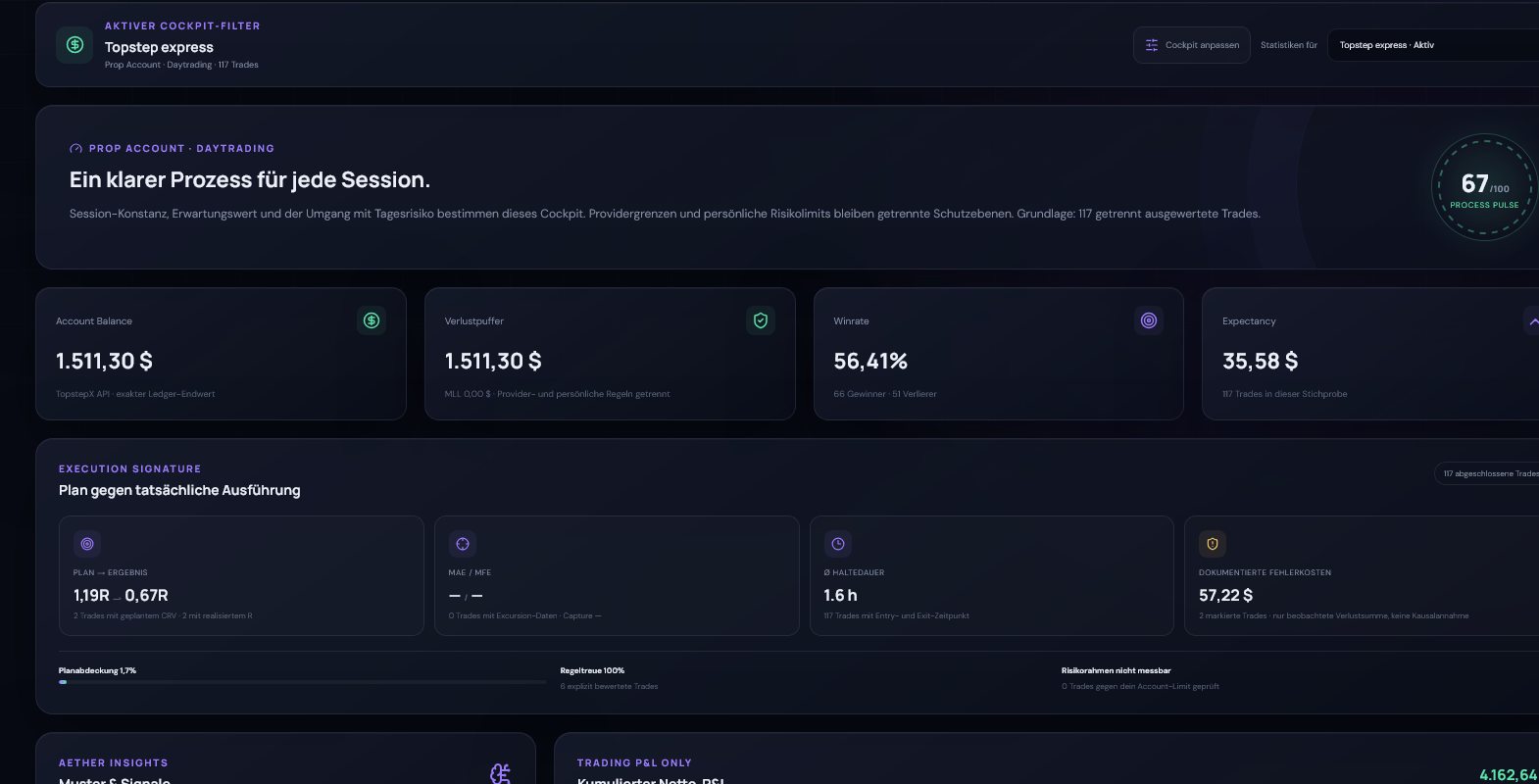
A useful prop cockpit shows current provider balance, loss room, payout progress, P&L since the last payout, lifetime trading P&L, distributed cash and costs as separate metrics. None should silently overwrite another.
Aether Ledger keeps these values account-scoped. With several prop accounts, a payout or rule state in account A must never change the balance or buffer of account B.
Sources and further reading
Topstep details were verified on July 30, 2026 and may change. Always use current official provider documentation before purchase, risk or payout decisions.