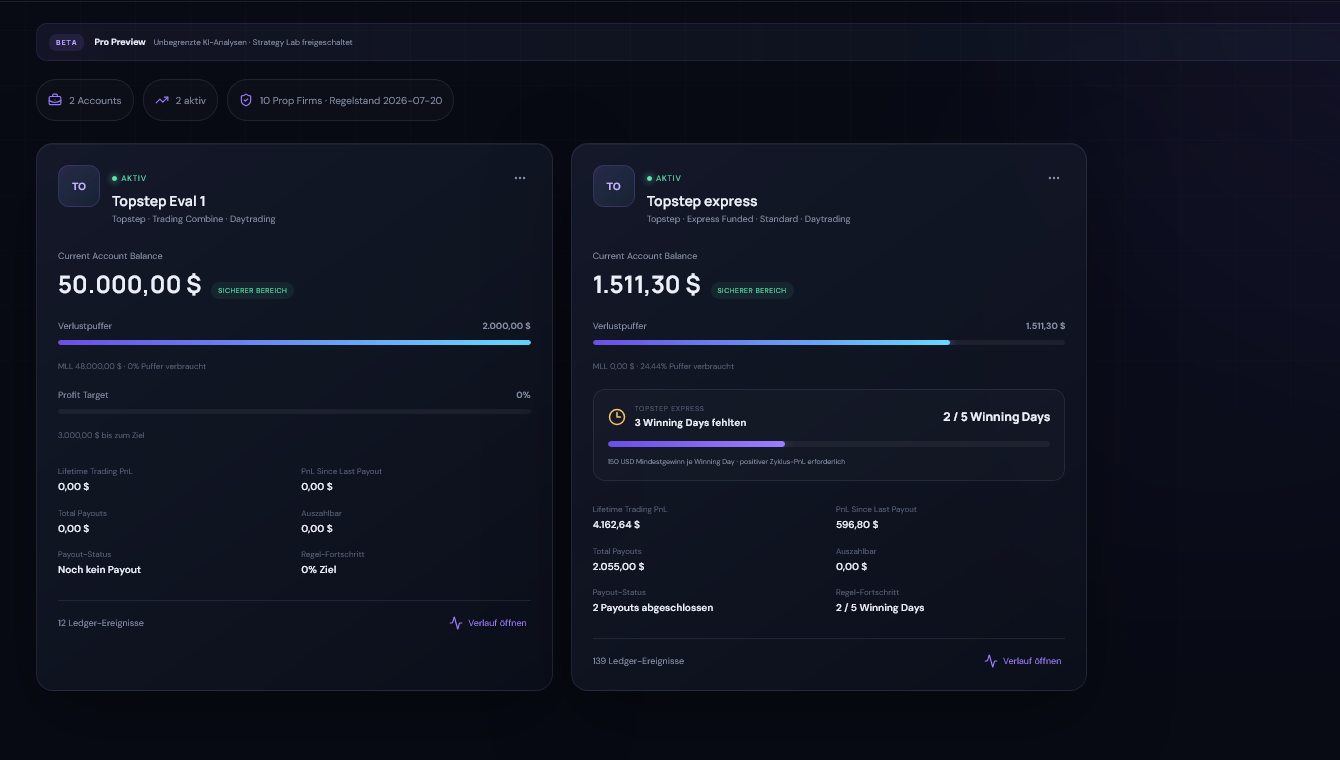
Start with the provider state, not a homemade balance
A synchronized provider balance is the external account endpoint. Imported executions explain how the account moved, but they should not silently replace or override that endpoint with a second calculation.
This distinction becomes critical after a payout. If Topstep has already reduced the account balance and a trader later records the payout as an economic event, subtracting it again would double-count the same cash movement. The ledger should preserve both facts: the provider balance changed, and a payout occurred.
Topstep account types also behave differently. A Trading Combine begins at its advertised account size, while an Express Funded Account balance starts at zero and grows with profits. A review system must know the phase before interpreting the number.
Data hierarchyProvider account value = external endpoint. Executions = explanatory history. Payout = economic event. Keep all three; do not apply one twice.
Step 1: Verify the account and rule context
Confirm the remote account mapping, account phase, payout path and the latest synchronized timestamp. Then review loss room and any personal daily limit separately. Provider rules and personal safeguards are two different layers.
Topstep states that the Maximum Loss Limit is the lowest balance the account may reach and that the standard Trading Combine uses an end-of-day trailing limit. Current program details can change, so the provider documentation—not a hard-coded memory—should remain the final reference.
Step 2: Reconcile the day’s executions
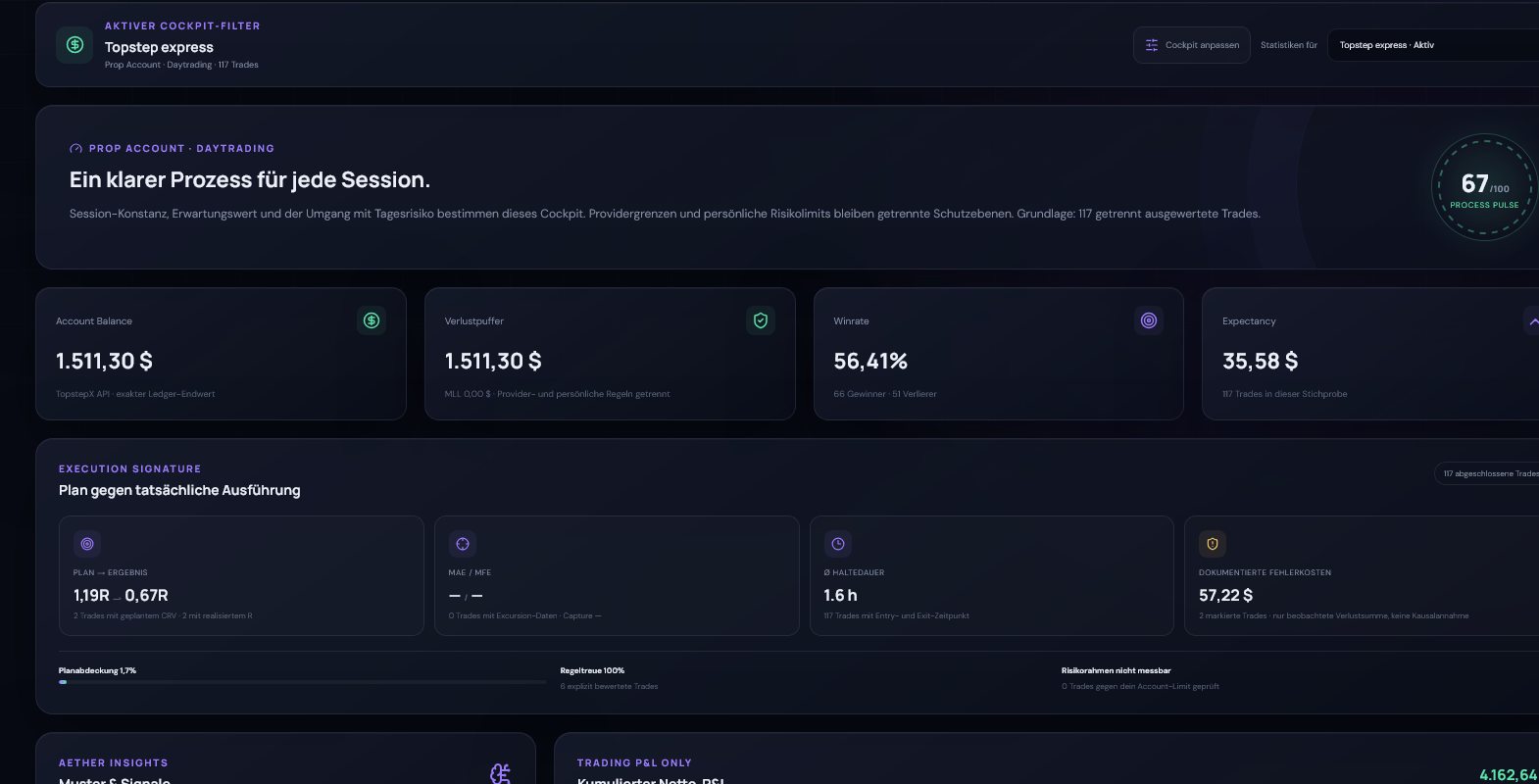
Check whether the number of imported fills matches the source platform. Review partial fills, direction changes, fees and corrected executions. A long entry and several partial exits may form one trade; a reversal may close one position and open another.
Do not infer a missing direction from profit or loss. Use the source side or direction field. This sounds basic, but a single mapping error can invert every downstream setup and session statistic.
Step 3: Separate payout eligibility from trade quality
Payout progress is important, but it is not a quality score. Under Topstep’s current Standard Express Funded Account path, payout eligibility uses five winning days of at least $150, while the Consistency path uses three traded days and a 40% consistency objective. Those thresholds belong to the provider workflow.
Your process review should still ask whether risk was planned, whether the setup matched the playbook and whether the trade would be acceptable if the result were hidden. A day can advance payout eligibility while reinforcing poor execution.
Step 4: Add the context the broker cannot know
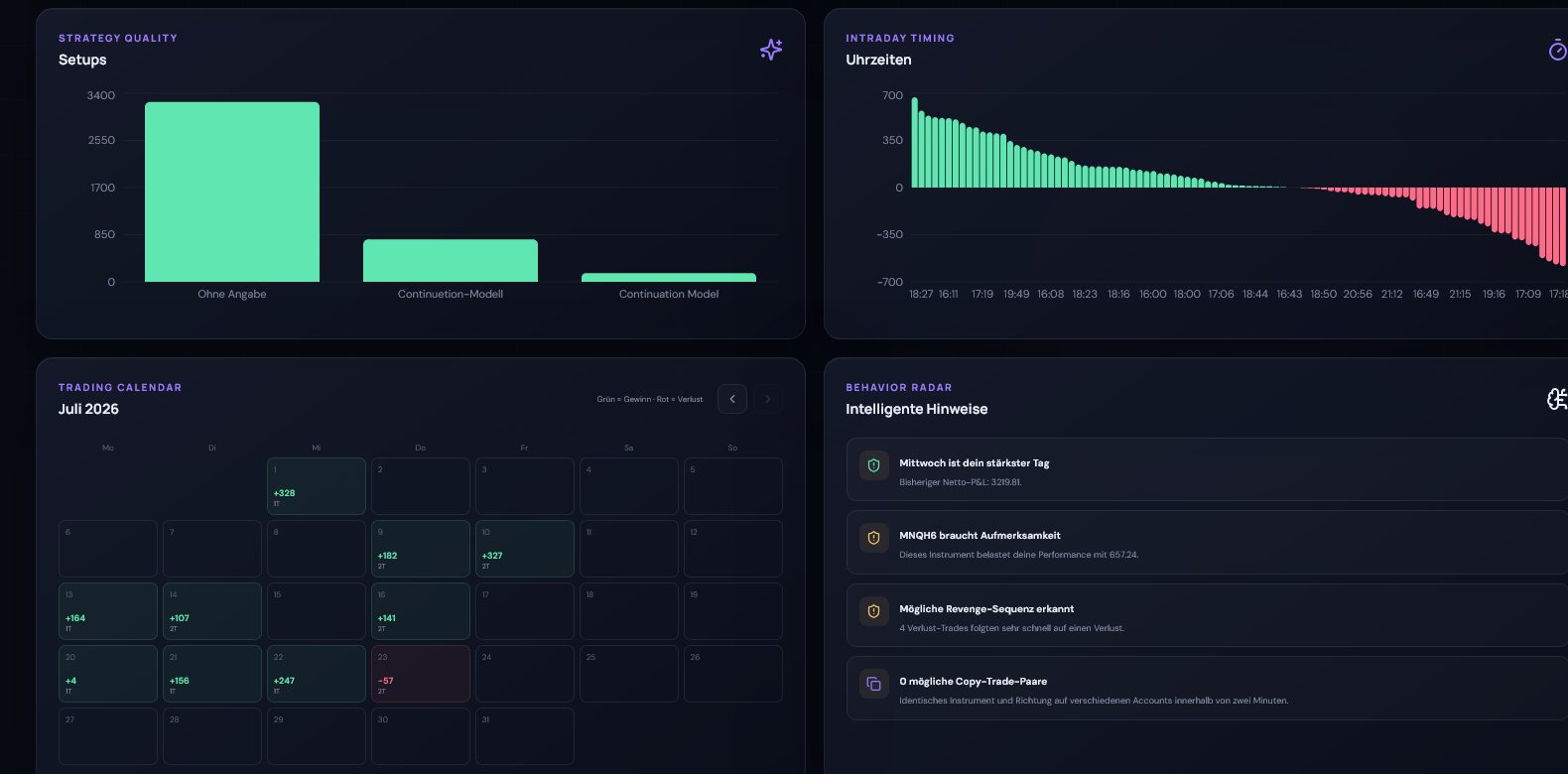
The platform can provide fills and account values. It cannot know why you entered, whether the setup matched your plan, what you noticed, or whether frustration changed your next decision. That is the trader’s part of the ledger.
Document the minimum useful context: setup, entry reason, exit reason, market phase, emotion, rule status and one sentence about what happened. Consistency beats length. A short review completed after every meaningful session creates a better dataset than a perfect essay written once a month.
Step 5: Ask the AI a falsifiable question
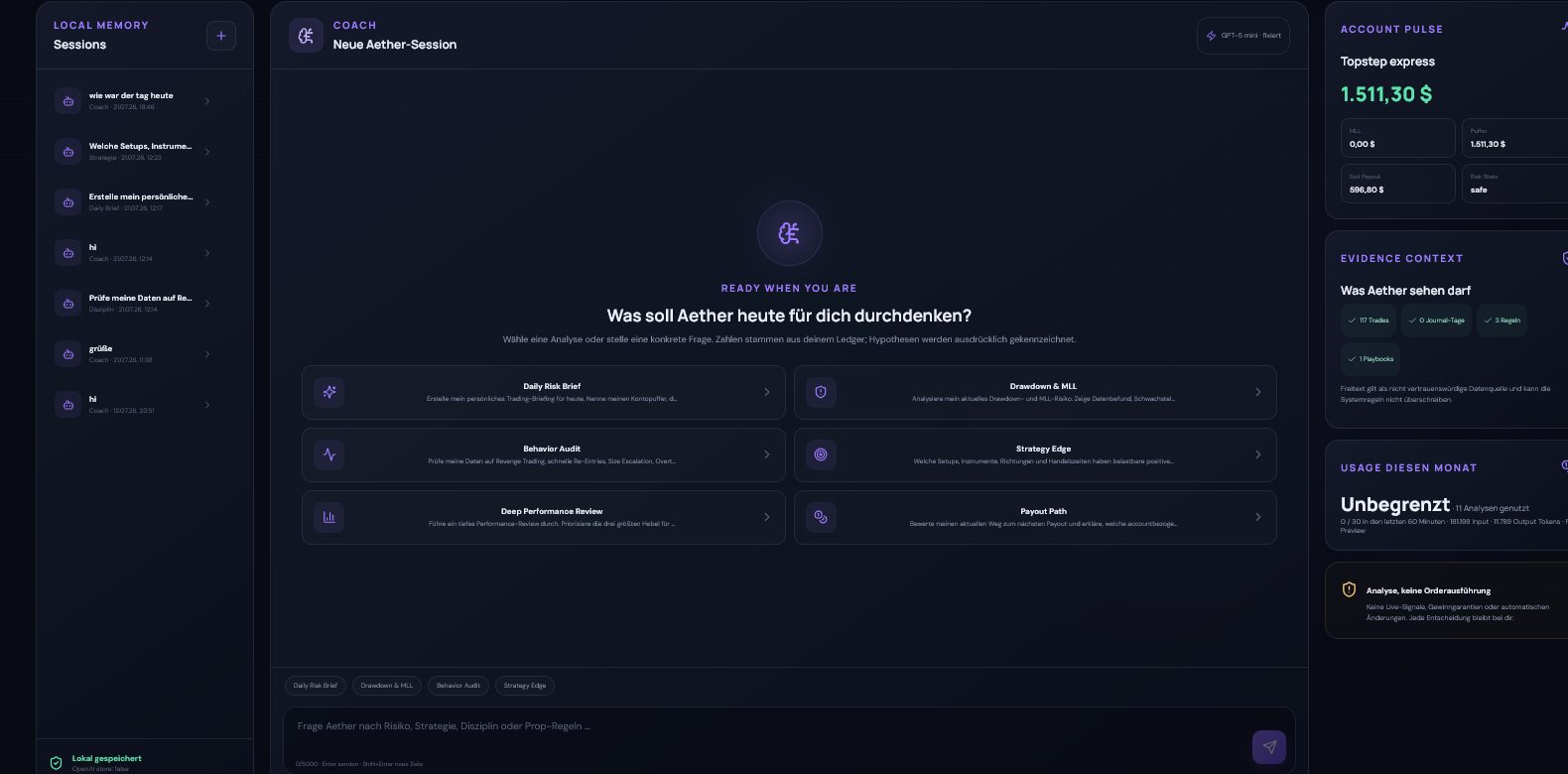
“How was my trading?” is too broad. Ask: “Across this account’s last 30 trades, what changes after my first losing trade of the day?” or “Compare documented Continuation Model trades with my playbook and separate missing fields from actual rule violations.”
A useful AI response should disclose the account scope, evidence sources and sample size. It should distinguish observation from hypothesis and avoid filling gaps with invented certainty. The final output should be a small next test, not a dramatic verdict.
A seven-point end-of-day checklist
Confirm the correct remote account. Confirm the current provider balance. Reconcile executions and fees. Review remaining loss room. Update winning-day or consistency progress. Document the decision context. Ask one evidence-led question only if the sample supports it.
The objective is not to produce more dashboards. It is to reduce the distance between what happened, what the rules required and what you will do differently in the next session.
Sources and further reading
Sources describe the cited evidence, not a promise of future trading performance. Verify time-sensitive provider information in the current official documentation.