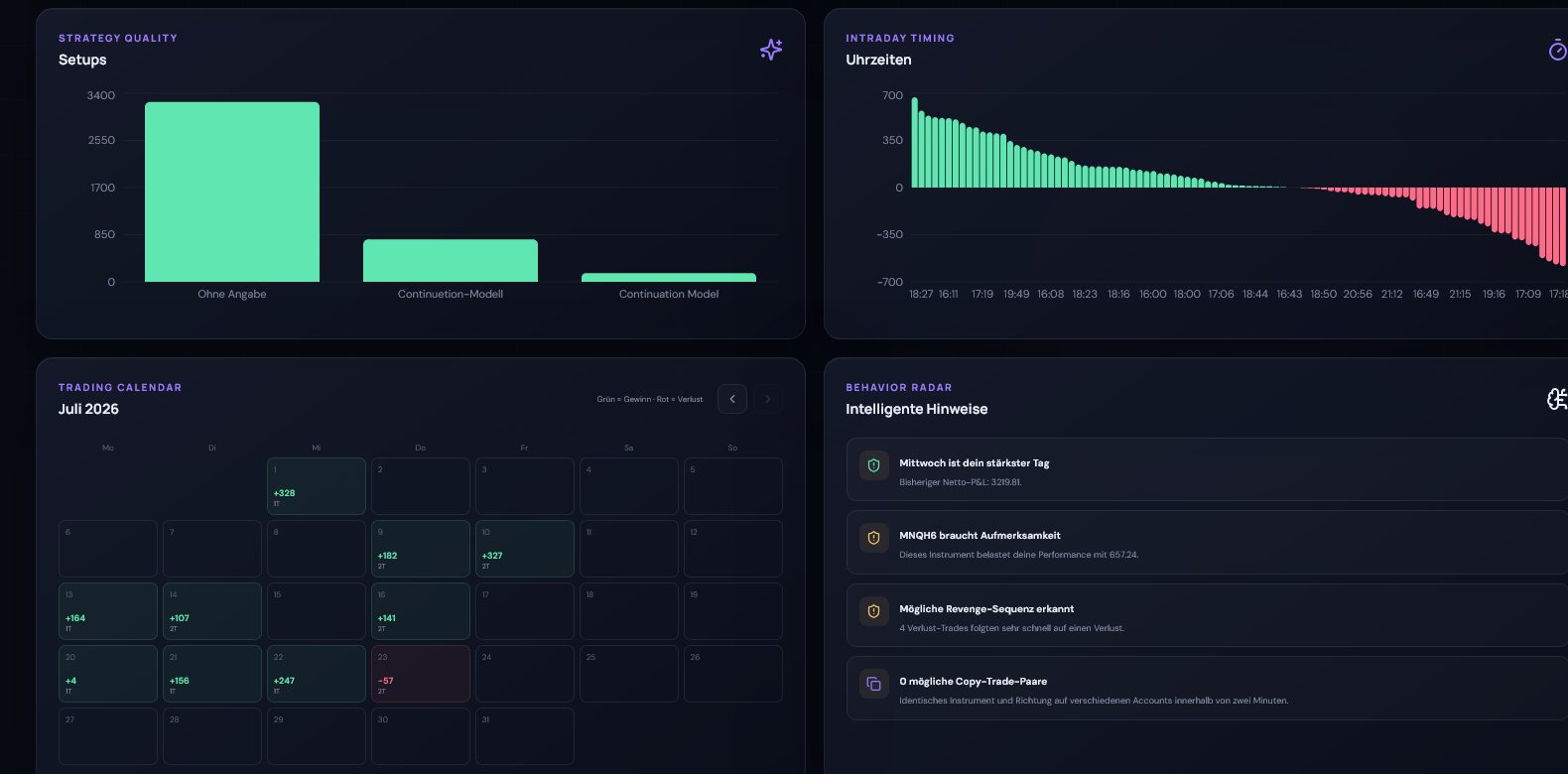
Trading processWhy most futures trading journals fail—and what to track instead.
A practical framework for turning fills, context, risk and behavior into a futures trading journal that can actually improve decisions.
Read the guidePerformance mathematics, behavioral evidence, prop-firm economics and practical product research—without shortcuts or performance promises.
Trading processA practical framework for turning fills, context, risk and behavior into a futures trading journal that can actually improve decisions.
Read the guide
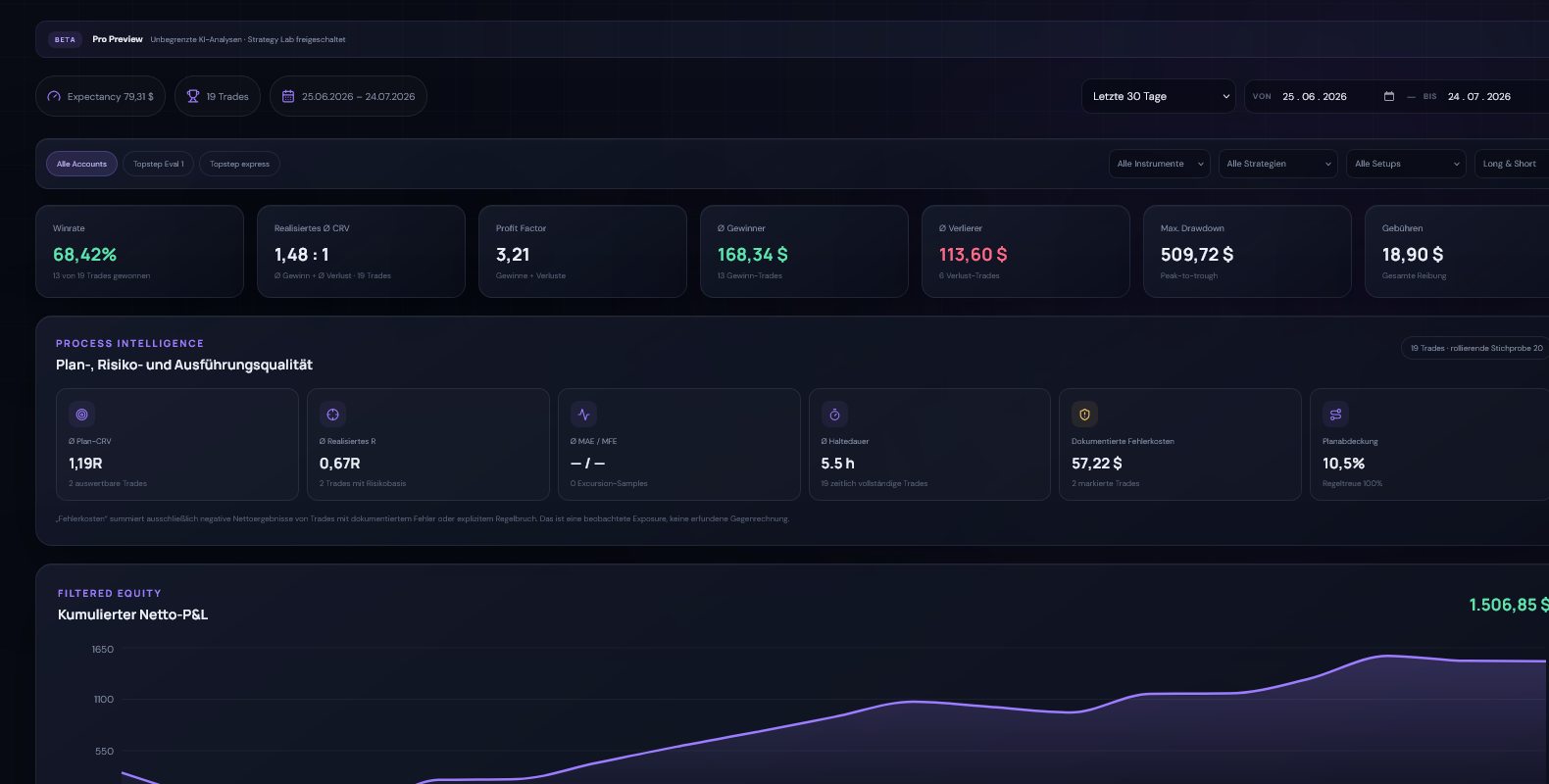
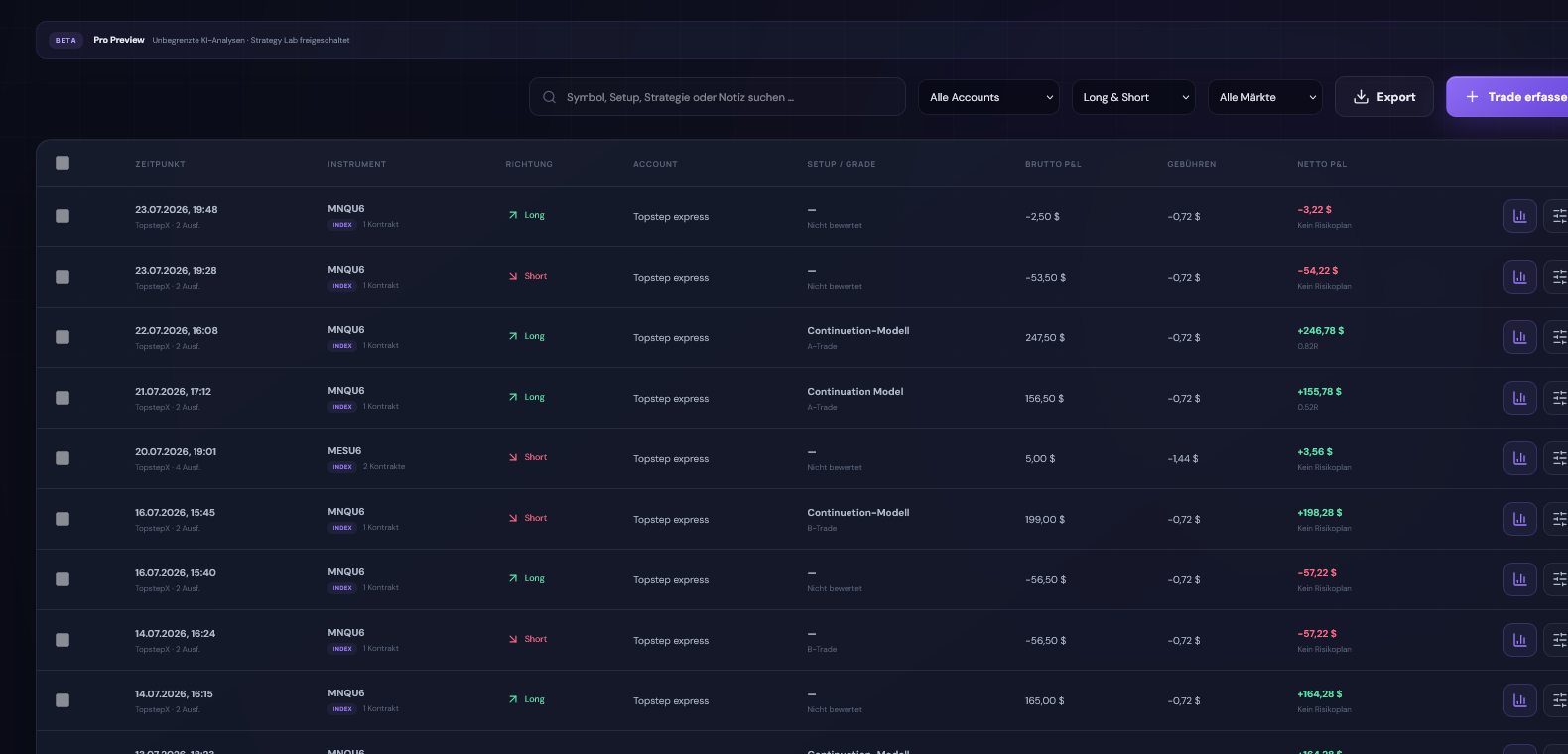
Prop tradingA step-by-step Topstep review workflow for account balance, loss room, winning days, payouts, executions, journal context and AI-assisted analysis.
Read the guide
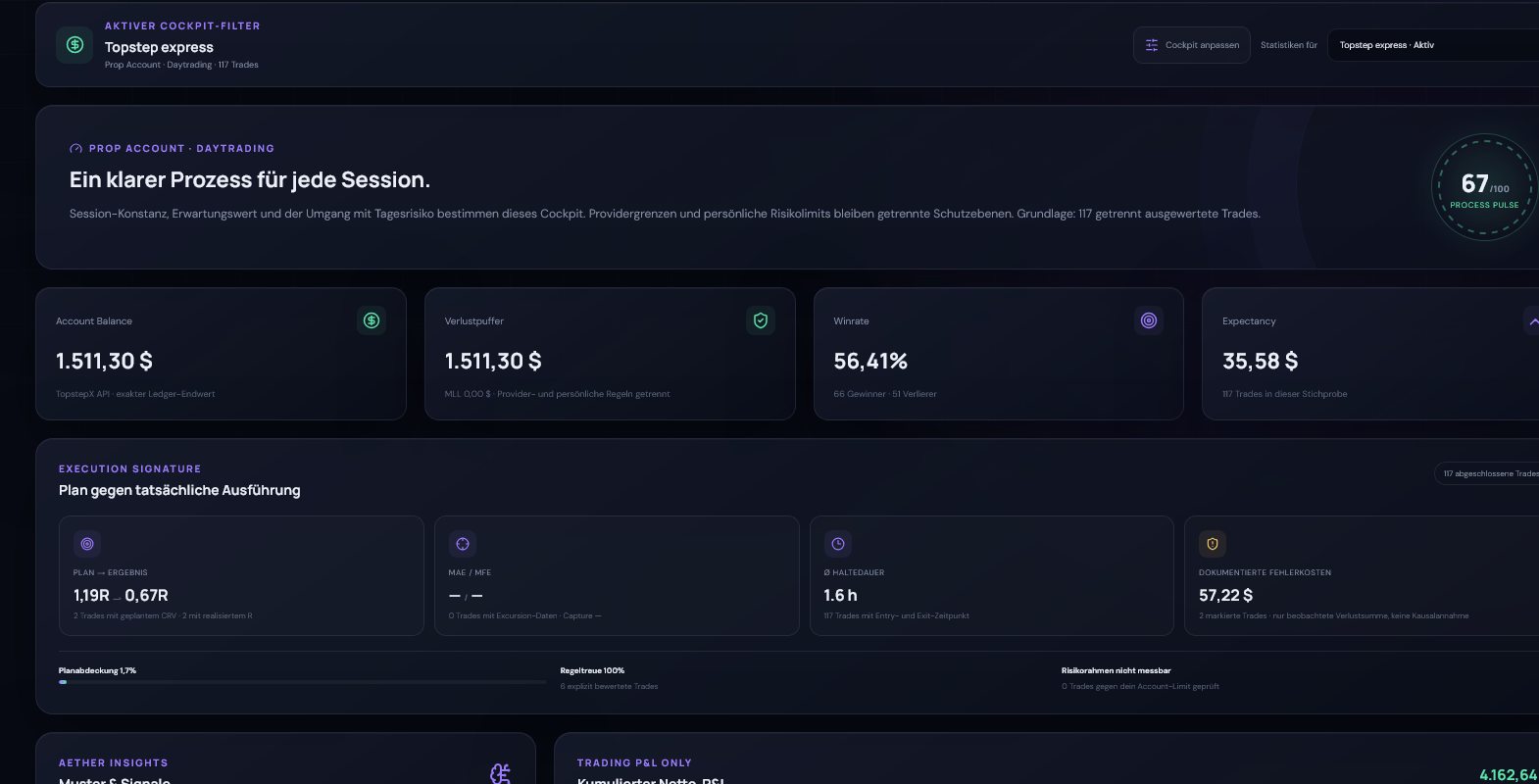
Performance mathWin rate, average winner, average loser, costs and drawdown belong together. Two distributions show why accuracy alone can mislead traders.
Read the guide
Trading behaviorResearch on professional futures traders found greater risk-taking after losses. Turn a subjective feeling into a cautious, testable behavior hypothesis.
Read the guide
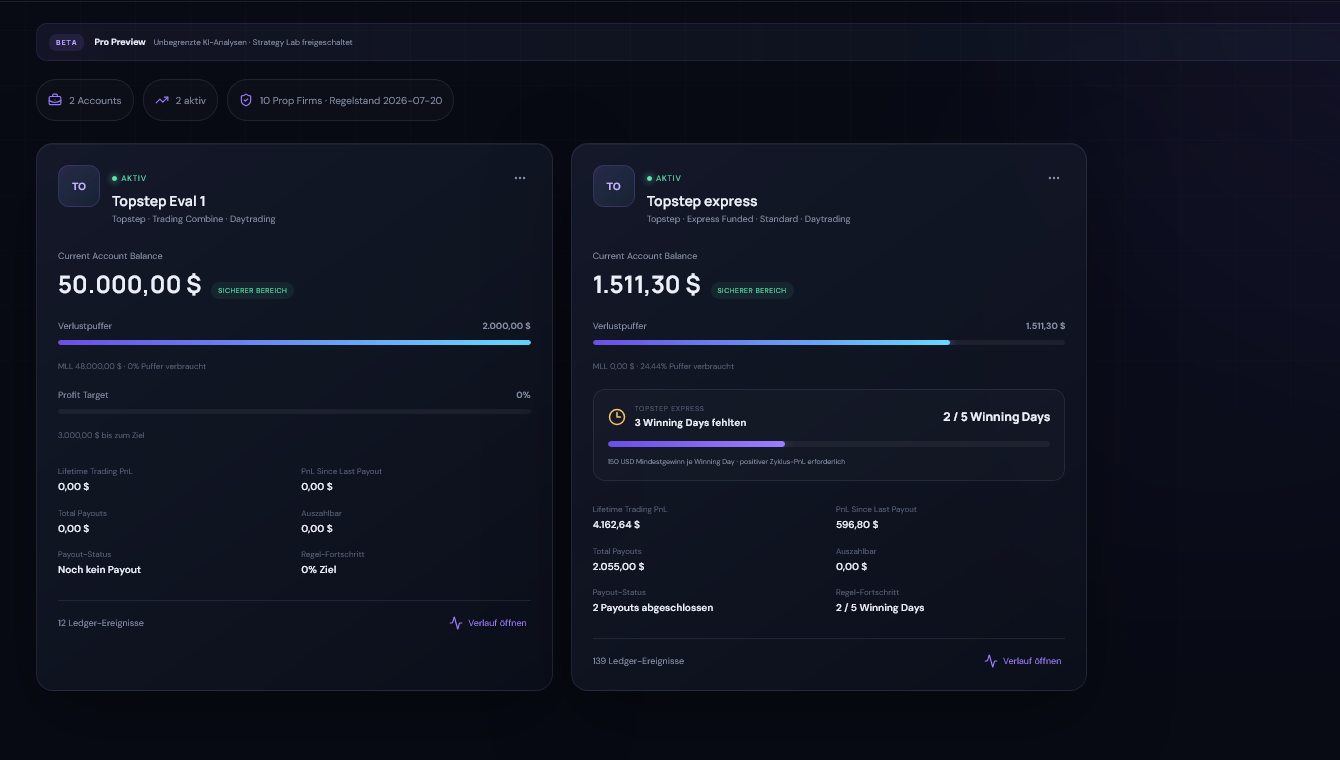
Prop economicsProvider balance, payouts and drawdown limits must not be applied twice. Topstep shows why a clear data hierarchy matters for prop accounts.
Read the guide
Futures market structureSeparate contract month, rollover, expiration and continuous charts. A practical guide for ES, NQ and other futures traders.
Read the guide
Event risk managementA practical macro-event workflow covering official calendars, time zones, liquidity, position risk and honest post-event review.
Read the guide
Futures risk managementCalculate futures position size by dividing risk budget by stop distance times tick value, adding costs and rounding down to whole contracts.
Read the guide
Trading performanceCalculate trading costs correctly: gross P&L minus commissions, exchange fees and execution shortfall, with a formula that avoids double counting.
Read the guide